
Basque
Recorded in the Basque Country and nearby cities, early 20th century
The Basque shelf holds published sides, every one of them classed UNKNOWN for era and carrying no year on the disc. They reached the catalog in a single brief window, and the credits that do appear lean heavily toward one ensemble: Chorale Basque Eresoinka, named on four of the seven sides.
Those chorale sides keep the original title forms intact. Agate Deuna appears as a chanson de ronde de la Sainte Agathe, with Olaizola tar Gabriel and Exomin Sararzazu beside the choir. Iru Erege (Trois Rois Mages) pairs the same choir with Olaizola'tar Gabirel and J. Guridi. A double side joins Jaiki-Jaiki! (Debout!) to Akera Ikusi Degu (J'ai vu le bouc...), adding J. Olaizola and J. Guridi to the billing. Bi Euzko Abesti closes the group under Gabriel and Buska de Sagastizabel.
The other three sides turn to dance and orchestra. FANDANGO BASQUE stands without a performer credit on the published row. FANDANGO DU PAYS BASQUE is given to RENÉ SUDRE et son orchestre with Francis Lopez. VALSE BASQUE is credited to ORCHESTRA MASCOTTE and Wittman. Nothing further is supplied for place, date, or biography; the records speak only through these titles and names.
About this hearth
Documentation of Basque music on commercial disc was limited compared with larger European markets, and much of what survives comes from regional collectors, small sessions and diaspora activity. Characteristic sounds include solo and choral singing, the txistu flute and drum, and accordion-led dance music. Bertso-style sung verse and communal song traditions stand alongside arranged folk material aimed at the gramophone. The sides that remain offer a partial but genuine window onto language and melody at the Atlantic edge of the Pyrenees.
Recorded in: Bilbao, San Sebastián, Bayonne
Bilbao, in their time
Bilbao along the Nervión — two men on the Cantal bridge, the Desierto, and the city through the war years. Commons is thin on Bilbao's streets, so a pull from the Basque national archive is the next step.
Press any photograph to open it full size — the player keeps going behind it.
The music-makers and the dress
6 period photographs of this hearth's own music-makers and dress, every one dated from its source's own records. Pictures are shown as documentary record, credited to the holding collection; anything here is removed on request. Sources: Wikimedia Commons (6).
Press any photograph to open it full size — the player keeps going behind it.
Figures on record
Every card is a genuine photograph of the artist, credited to its source. Performers of this era often left no portrait behind — where none survives, we show nothing rather than a stand-in image. Pick a figure to pull their recordings up.
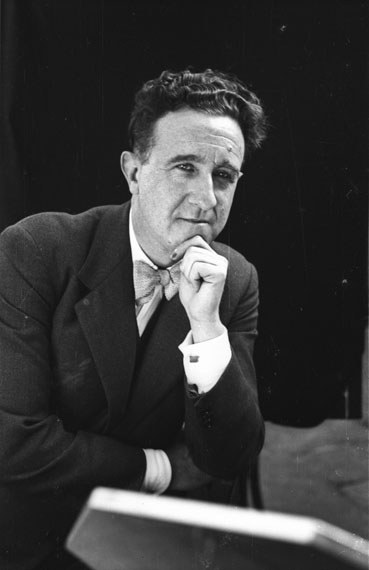
The Hernani bass who founded and directed the Eresoinka choir — the Basque ensemble whose sides carry this hearth's folk songs.
CC BY-SA 4.0 — Jesús Elósegi / GureGipuzkoa, 1937Restored Recordings
Every track below is a remaster. Press play on the full sequence, or pick a single recording.
a) Jaiki-Jaiki! (Debout!); b) Akera Ikusi Degu (J'ai vu le bouc...)
Agate Deuna (Chanson de Ronde de la Sainte Agathe)
Bi Euzko Abesti
FANDANGO DU PAYS BASQUE
Iru Erege (Trois Rois Mages)
VALSE BASQUE
About the restoration
Every recording here is a historical track sourced from a public archive and remastered through a purpose-built chain — the same fixed chain for every file, no machine-learning enhancement. The aim is simple: sound better, and meet YouTube's audio standards. Rights status differs per recording and sources are credited where known; anything still in copyright is published with attribution and removed on request. The surface noise of the original transfer is still audible, because removing it completely would mean removing the recording too. How the restoration works →