
Finnish
Recorded in Helsinki and in North American Finnish communities, 1900s–1930s
Published sides carry the Finnish tag, drawn from the vault rows behind them. The years that appear on the discs are 1902, 1928, 1934 and 1950. Era classification is uneven and frankly thin at the early end: the majority remain unknown, a few fall in the 1923–46 gray band, a few are marked 1947 or later, and only a single side stands as a clear pre-1923 recording.
Aino Ackté opens the dated line with the 1902 Berceuse finlandaise, Pai pai paitaressu, given as a Finnish lullaby. Otto Pyykkönen follows in 1928 with Anssin Jukka ja Härman häät. Two 1934 sides from the Turpeinen Trio—Ahvenanmaan Sotiisi and Asikkalan Polkka—credit Viola Turpeinen, Werner Birch and William Syrjälä; a further Finnish Schottis is issued under Viola Turpeinen’s name alone.
Ulla Katajavuori, with Koskimies, holds the two 1950 sides titled Kantele and Kantele-Mazurka. Waltz appears twice among the title words, once on Michael Herman’s Folk Orchestra’s Finnish Waltz (Metsäkukkia Valssi) and once on Katri Oksanen’s Old Finnish Wedding Waltz paired with Nyystin Polkka. Benno Moiseiwitsch is heard in Refrain de Berceau and a West-Finnish Dance after Palmgren; Arvo Hannikainen in a Finnish Romance with S. Palmgren; Paul Norrback in Finnish Medley #2. One side simply gathers Suomalaisia ja ruotsalaisia lauluja—Finnish and Swedish songs.
Helsinki, in their time
Helsinki when it was still Helsingfors — the Market Square in every season, the south harbour, and the streets the records were sold on. Library of Congress and Finnish national archives.
Press any photograph to open it full size — the player keeps going behind it.
Figures on record
Every card is a genuine photograph of the artist, credited to its source. Performers of this era often left no portrait behind — where none survives, we show nothing rather than a stand-in image. Pick a figure to pull their recordings up.
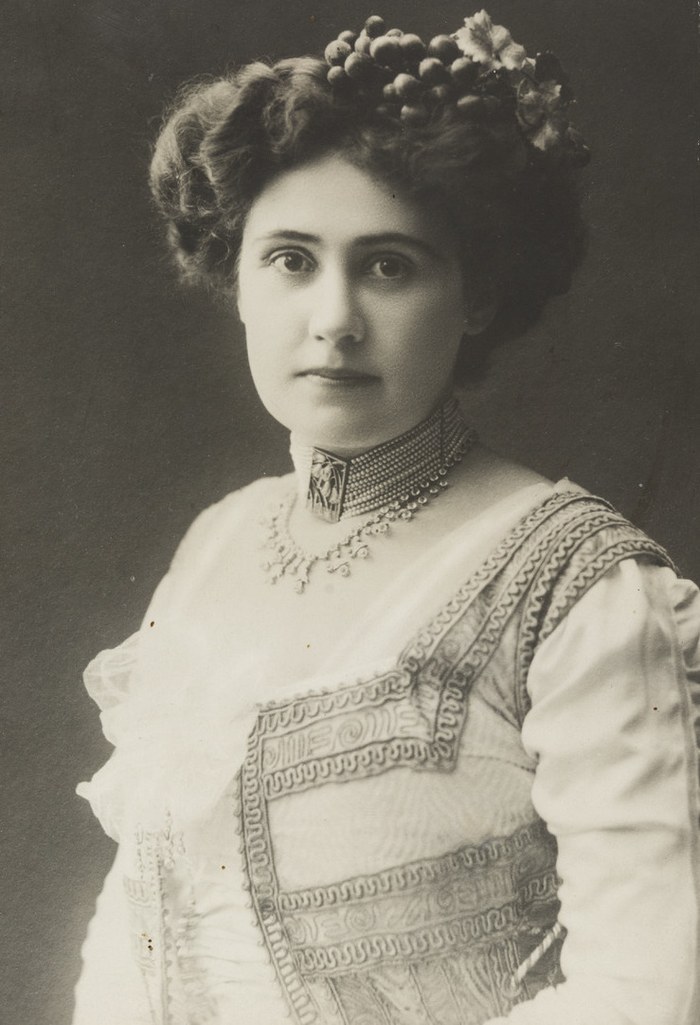
Finland's first great international voice: she sang at the Paris Opéra and at Covent Garden, and later founded the opera festival at Savonlinna. Her 1902 side is one of the earliest Finnish voices ever put on disc.
CC BY 4.0 — Finnish Heritage Agency (Museovirasto) 📰 New-York tribune (New York [N.Y.]), 1904-04-17 +2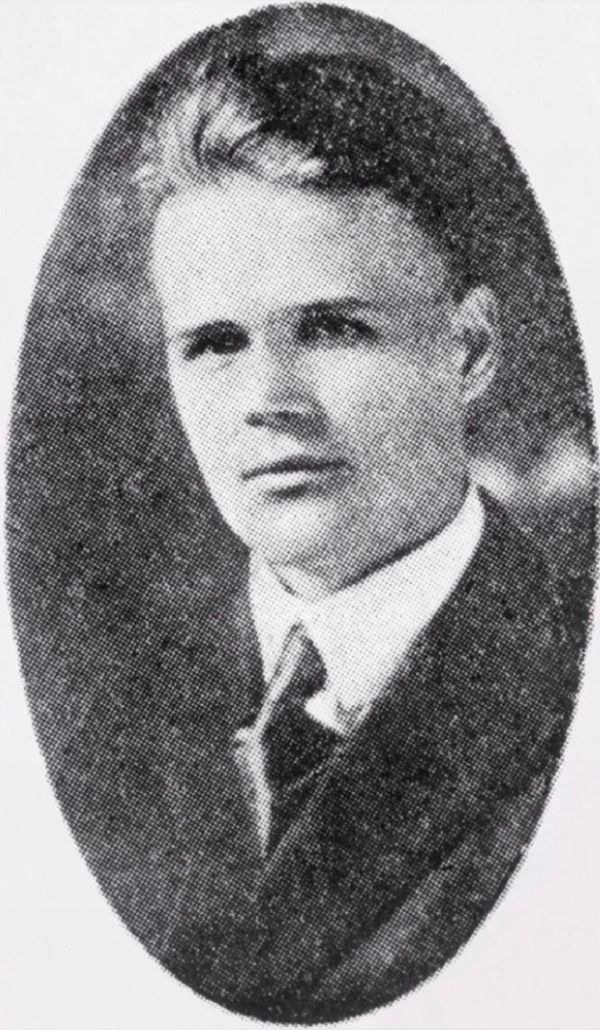
A Finnish-American kupletti singer who left for the United States in 1913, studied singing at Waukegan and sang with the New Yorkin Laulumiehet; he cut thirty-two titles for Columbia.
Public domain — Photographer unknown, 1921 📰 The Carbon County news (Red Lodge,..., 1929-05-16 +2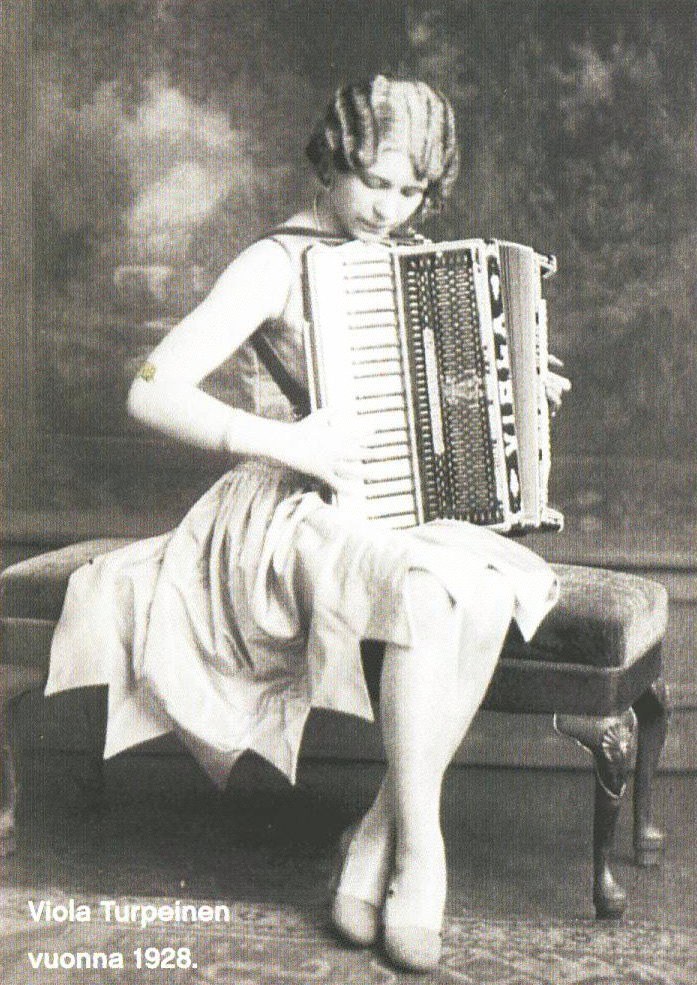
A Finnish-American accordionist from the Upper Peninsula who led her own trio at a time when very few women fronted a recording band — the Turpeinen Trio polkas on this hearth are hers.
Public domain — Photographer unknown, 1928 📰 Grand Rapids herald-review (Grand..., 1930-05-21 +2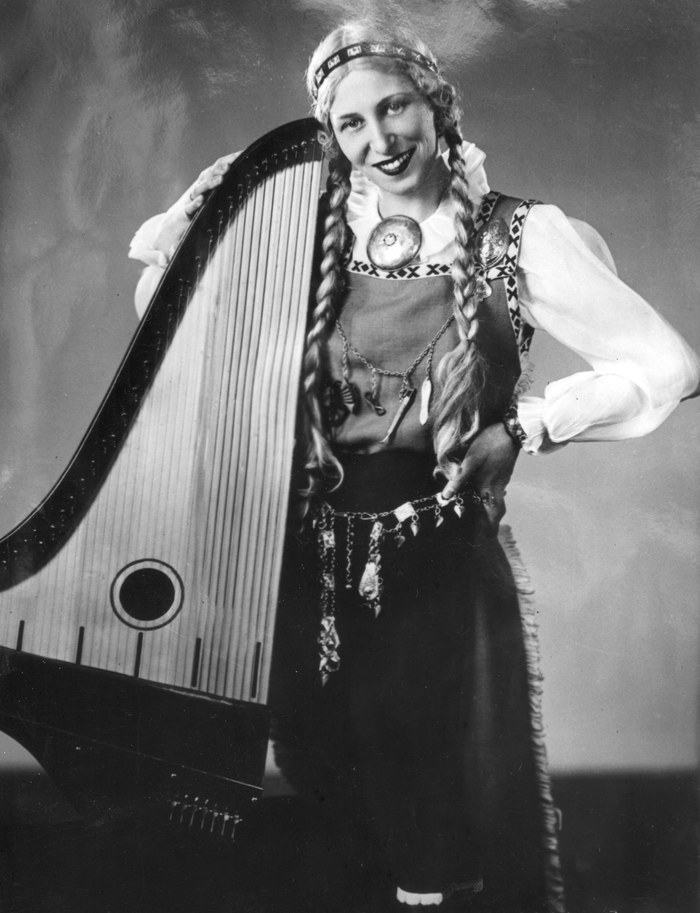
The virtuoso who carried Finland's national instrument out of folk display and onto the concert stage, playing in national costume and usually the only woman on the bill.
Public domain — Tenhovaara studio, 1930s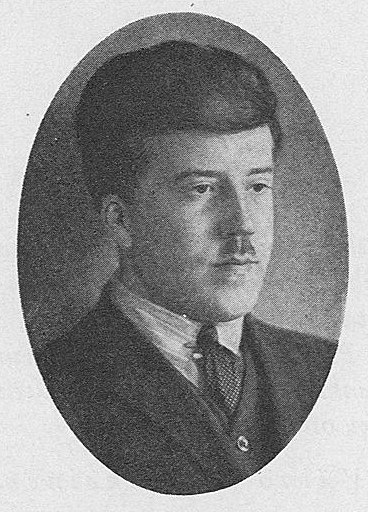
Concertmaster of the Helsinki City Orchestra from 1923 until his death, and a teacher of a whole generation of Finnish violinists.
Public domain — National Library of Finland, 1933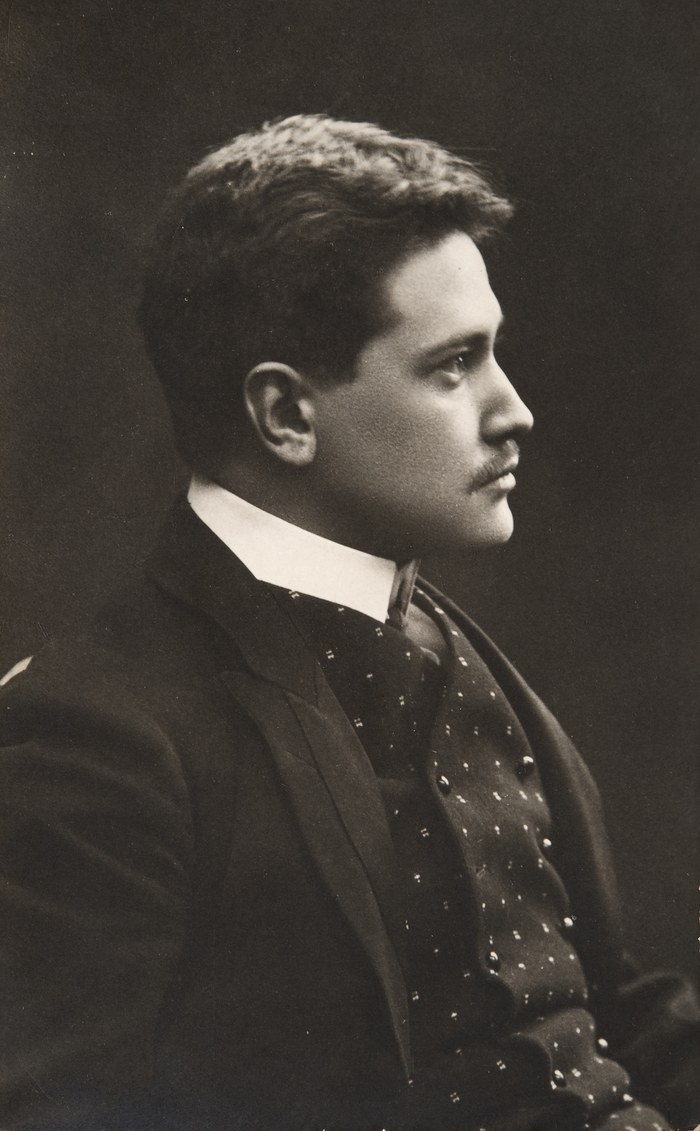
Composer-pianist in the Liszt line whose miniatures were played across Scandinavia and the United States, where he spent the war years on tour.
Public domain — Photographer unknown, c. 1910s 📰 The Tacoma times (Tacoma, Wash.), 1939-02-11 +2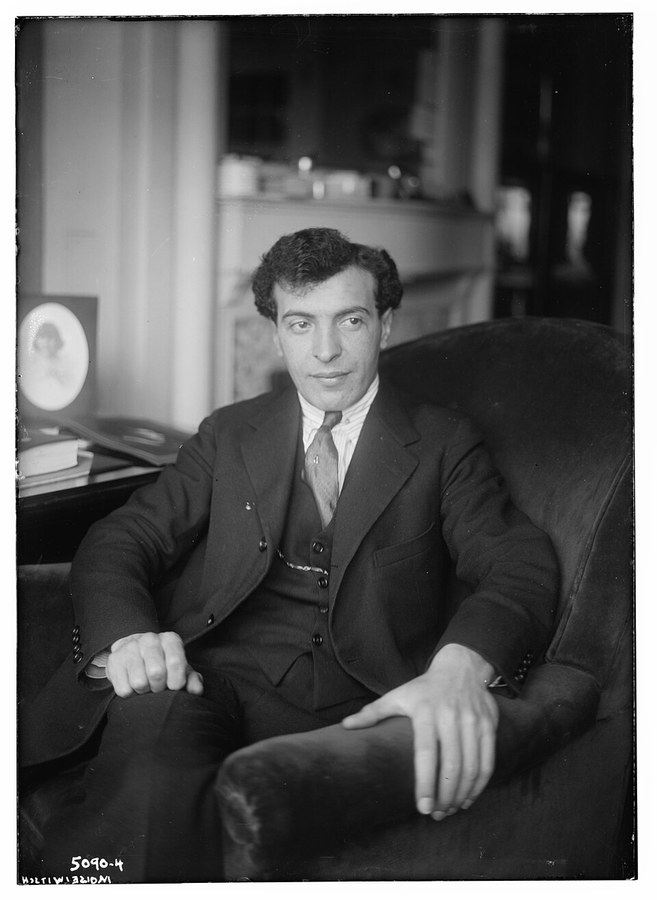
Benno Moiseiwitsch (1890–1963) was a Russian-British pianist born in Odessa who studied with Theodor Leschetizky in Vienna and settled in England, becoming a naturalised British citizen in 1937. Renowned for his refined technique, elegant phrasing, and interpretations of Romantic repertoire especially Rachmaninoff, Chopin, and Schumann, he made numerous 78rpm recordings for His Master's Voice from 1916 onward and toured widely including multiple visits to Australia.
Wikimedia Commons — check file page for licence 📰 The American Jewish world..., 1922-12-15 +2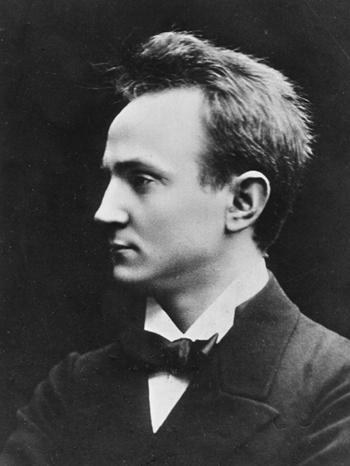
Finnish conductor and cellist (1872–1947).
Portrait via Wikimedia Commons — see file page for licence 📰 The Billings gazette (Billings,..., 1904-08-09 +2
Finnish musician.
Portrait via Wikimedia Commons — see file page for licence 📰 Auttaja (Ironwood, Mich.), 1949-05-19 +2The music-makers and the dress
3 period photographs of this hearth's own music-makers and dress, every one dated from its source's own records. Pictures are shown as documentary record, credited to the holding collection; anything here is removed on request. Sources: Wikimedia Commons (3).
Press any photograph to open it full size — the player keeps going behind it.
Restored Recordings
Every track below is a remaster. Press play on the full sequence, or pick a single recording.
Jalasjarven (Polka)
(a) REFRAIN DE BERCEAU; (b) WEST-FINNISH DANCE
🇫🇮 Juho Koskelo - Naapurin Likkā (1921) · Remastered
🇫🇮 Juho Koskelo - Sorsa (1921) · Remastered
Ahvenanmaan (Sotiisi), Finnish
Anssin jukka ja härman häät - Finnish folk song
Asikkalan (Polkka), Finnish
Berceusefinlandaise
FINNISH MEDLEY #2 (SUOMALAINEN SIKERMÄ #2)
FINNISH ROMANCE
FINNISH SCHOTTIS
FINNISH WALTZ (Metsäkukkia Valssi)
KANTELE
KANTELE-MAZURKA
Old Finnish Wedding Waltz; Nyystin Polkka; Ladsuuden Yystavalle (To a Childhood Friend)
Schnéevoigt, Georg - Sibelius symph. 6 (HMV DB 2321-3) 1934
VALSSI MENNEILTÄ AJOILTA
About the restoration
Every recording here is a historical track sourced from a public archive and remastered through a purpose-built chain — the same fixed chain for every file, no machine-learning enhancement. The aim is simple: sound better, and meet YouTube's audio standards. Rights status differs per recording and sources are credited where known; anything still in copyright is published with attribution and removed on request. The surface noise of the original transfer is still audible, because removing it completely would mean removing the recording too. How the restoration works →